

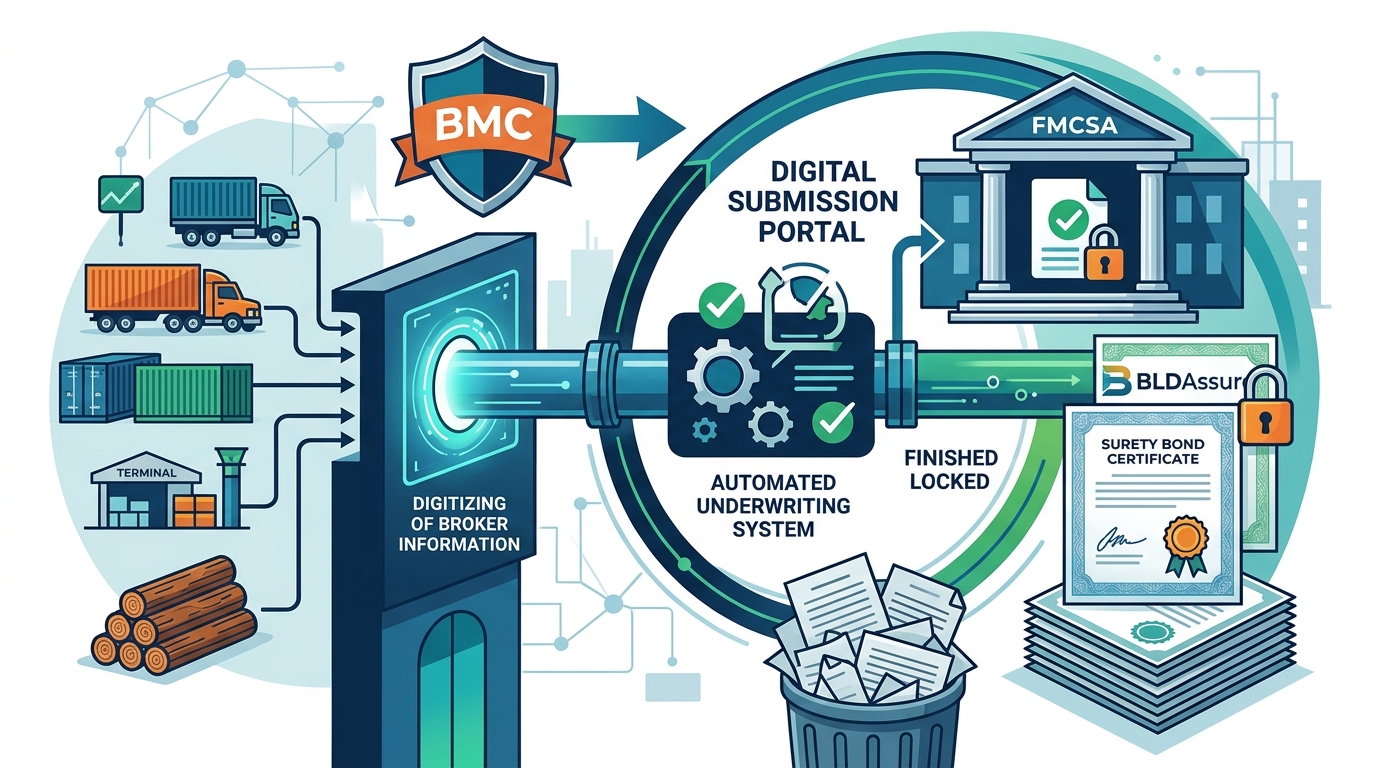
Freight brokers must secure a BMC-84 surety bond to operate legally under federal regulations. BLDAssure provides a streamlined digital platform to obtain this bond, handling the underwriting and FMCSA filing process. This guide explains the bond requirements, the filing steps, and how to choose the right provider for your brokerage. For additional details, review the About us our team.
Surety Bond Providers
Choosing the right surety bond provider is the first critical step in obtaining your BMC-84 bond. A surety bond is a three-party agreement that guarantees the broker will adhere to federal regulations and pay for any damages caused by non-compliance. The bond protects shippers and the public, not the broker, so the provider must be reputable and efficient.
Types of Providers
There are two main types of providers: direct surety companies and bond brokers. Direct surety companies underwrite the risk themselves, while brokers connect you with multiple sureties to find the best rate. BLDAssure operates as a specialized insurance technology platform that integrates with surety partners like Propeller Bonds. This integration allows for faster underwriting and a more transparent pricing model compared to traditional brokers who may add hidden fees. For additional details, review the Surety bonds in every.
Why Choose a Digital-First Platform
Traditional bond issuance can take days or weeks due to manual paperwork. Digital-first platforms like BLDAssure automate the data collection process. By pulling public records and license data, these platforms reduce the time spent on underwriting. For a freight broker, speed is essential because you cannot operate until the bond is filed and approved by the FMCSA. A provider that offers a clear, digital workflow ensures you can start taking loads sooner.
Cost and Credit Considerations
The cost of a BMC-84 bond is typically a percentage of the bond amount, which is $75,000. Rates vary based on your credit score and financial history. If you have excellent credit, you might pay a lower premium. If your credit is less than ideal, you may need to provide additional financial documentation or pay a higher premium. BLDAssure provides clear pricing upfront, so you know exactly what you will pay before you commit. This transparency helps you budget accurately for your new brokerage.
FMCSA Filing Process
Once you have secured your BMC-84 bond, you must file it with the Federal Motor Carrier Safety Administration (FMCSA). The filing process is strictly regulated and must be completed within 30 days of receiving your bond. Failure to file on time can result in the bond being voided, requiring you to start the process over.
Step 1: Receive the Bond Certificate
After underwriting is complete, your surety provider will issue a bond certificate. This document contains specific details, including the bond number, the surety company name, and the FMCSA code. You must ensure that many information on the certificate is accurate. Any errors in the broker name or FMCSA code can cause the FMCSA to reject the filing. BLDAssure verifies these details before issuing the certificate to minimize the risk of rejection.
Step 2: Submit to FMCSA
You can file the bond electronically through the FMCSA’s Licensing and Insurance (L&I) system. This is the preferred method because it is faster and provides immediate confirmation. When filing, you will need to enter the bond number and the surety company’s FMCSA code. The system will validate the bond against the surety’s records. If the bond is valid, your FMCSA registration status will update to reflect that you are bonded.
Step 3: Monitor Your Status
After filing, you should monitor your FMCSA registration status. It may take a few business days for the status to update from