
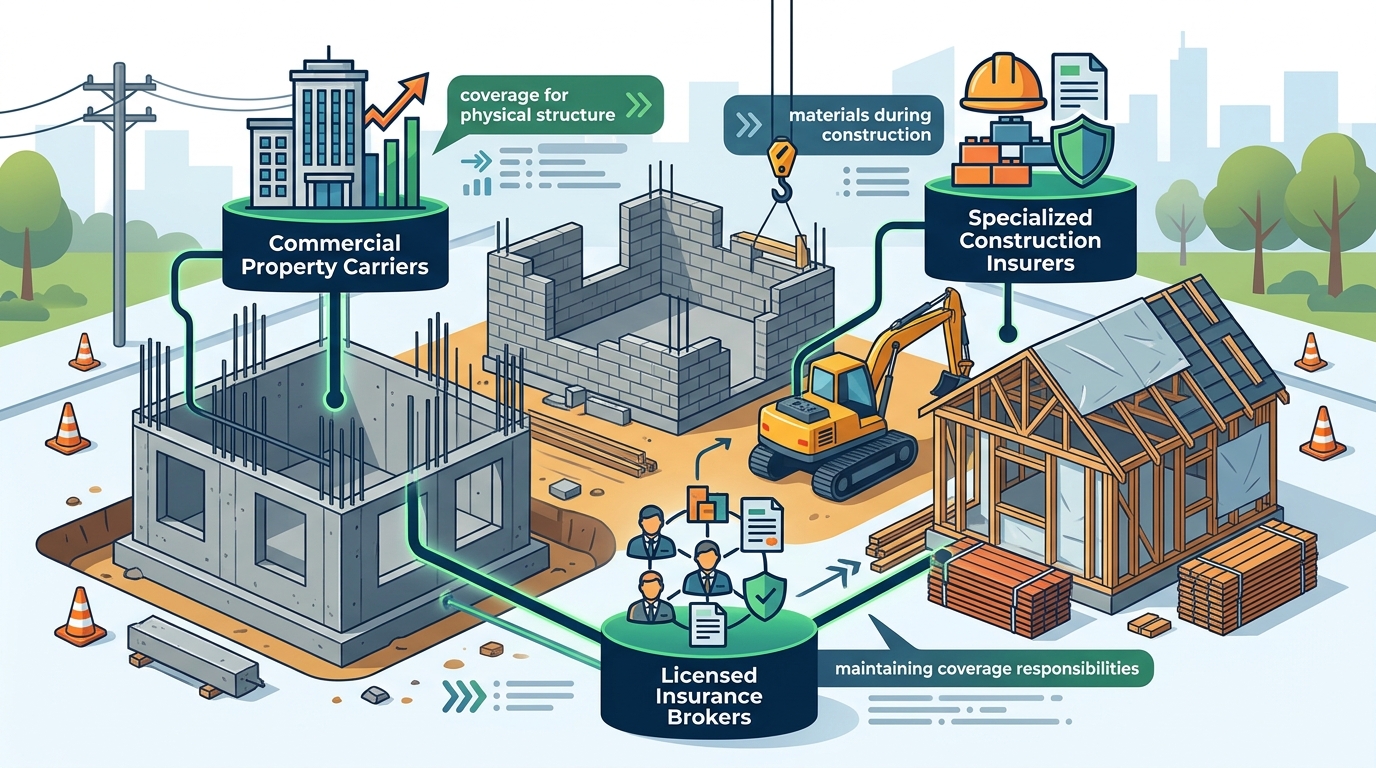
Builder's risk insurance is a specialized property policy that protects the physical structure and materials during construction. It is provided by commercial property carriers, specialized construction insurers, and licensed insurance brokers who understand the unique hazards of the built environment. This guide covers the specific types of carriers that write these policies and clarifies the critical responsibilities of the policy purchaser in maintaining coverage.
Construction Insurance Carriers
Understanding who actually writes builder's risk insurance requires looking beyond generic commercial insurance providers. The market is segmented into specialized carriers, large national insurers, and the brokers who connect them to contractors. Each plays a distinct role in the risk transfer process. according to 2024 ACPRIA Project
Specialized Construction Carriers
Specialized construction carriers are insurance companies that focus exclusively or primarily on the construction industry. These carriers possess deep underwriting expertise in specific project types, such as ground-up residential, commercial high-rises, or heavy civil infrastructure. Because they understand the specific risks of soil conditions, weather delays, and material theft, they often offer more tailored coverage terms than generalist carriers. For example, a carrier specializing in residential construction will have specific underwriting guidelines for wood-frame structures that a general commercial carrier might not possess.
National and Regional Commercial Insurers
Large national insurers and regional commercial carriers also provide builder's risk coverage, often as part of a broader commercial insurance package. These providers may offer builder's risk as a standalone policy or as an endorsement to a general liability or property policy. While they have the financial strength to cover large losses, their underwriting may be less granular regarding construction-specific hazards. Contractors often use these carriers for smaller projects or when seeking a single point of contact for multiple insurance lines.
The Role of Licensed Brokers and Agencies
While carriers write the policies, licensed insurance brokers and agencies are the primary interface for most contractors. Brokers act as intermediaries, shopping the project across multiple carriers to find the best fit for coverage and cost. A specialized construction insurance broker understands the nuances of different carrier appetites. They know which carriers are actively writing a specific type of project in a specific region. This expertise is crucial because not every carrier will underwrite every project, especially those in high-risk areas or with complex scopes of work.
| Provider Type | Primary Focus | Best For |
|---|---|---|
| Specialized Construction Carriers | Deep industry expertise, tailored terms | Complex projects, high-value builds, specific trade risks |
| National Commercial Insurers | Broad commercial lines, financial strength | Smaller projects, bundled policies, large corporate contractors |
| Specialized Brokers/Agencies | Market access, underwriting navigation | Contractors needing competitive quotes and coverage clarity |
BLDAssure operates within this ecosystem by connecting contractors with carriers that specifically write construction. Our platform compares coverage terms, not just price, ensuring that the policy actually pays for the risks you face. We work with licensed agents who take your project details to carriers that fit your specific construction type and location.
Policy Purchaser Responsibility
Identifying the provider is only half the equation. The other half is understanding who is responsible for buying and maintaining the policy. Builder's risk insurance is a project-specific policy, and the responsibility for purchasing it depends on the contract terms and the nature of the project.
Contractual Obligations
In most construction contracts, the responsibility for builder's risk insurance is explicitly defined. For owner-builder projects, the property owner is typically responsible for purchasing the policy. In design-build or general contractor models, the contract may require the general contractor to carry the policy, or it may require the owner to do so. It is critical to review the insurance section of the contract before work begins. Ambiguity here can lead to gaps in coverage if a loss occurs. The policy must name the correct parties as insureds, including the owner, the general contractor, and sometimes key subcontractors.
Scope and Duration of Coverage
The policy purchaser is responsible for ensuring the coverage scope matches the project scope. Builder's risk policies typically cover the structure from the moment materials are delivered to the site until the project is completed and accepted. This is known as the "completed value." The purchaser must accurately estimate this value, as underinsuring the project can result in a penalty or a reduced payout in the event of a total loss. Additionally, the policy term must align with the construction schedule. If the project is delayed, the policy may need to be extended, which is the responsibility of the policyholder to manage with the carrier. according to 2024 ACPRIA Project
Claims and Documentation
When a loss occurs, the policy purchaser is responsible for initiating the claims process. This involves notifying the carrier promptly and providing detailed documentation of the damage. Because construction sites are dynamic, clear documentation of what was in place at the time of the loss is essential. The purchaser should maintain a project file that includes the policy declaration page, certificates of insurance, and photos of the project at various stages. This documentation supports the claim and helps ensure a fair and timely resolution.
BLDAssure helps contractors and owners navigate these responsibilities by providing a single platform for project data and insurance. We ensure that the policy is tied to the specific permit and project details, reducing the risk of misrepresentation or coverage gaps. Our licensed agents review the terms with you, ensuring you understand what is covered and what your obligations are as the policyholder.
Key Takeaways
- Builder's risk insurance is provided by specialized construction carriers, national commercial insurers, and licensed brokers.
- Specialized carriers offer deeper expertise in construction-specific hazards and tailored policy terms.
- Licensed brokers play a critical role in shopping the market and finding the right carrier for your project.
- The responsibility for purchasing builder's risk insurance is defined by the construction contract.
- Policy purchasers must accurately estimate the completed value to avoid underinsurance penalties.
- Coverage duration must align with the construction schedule, including any potential delays.
- Maintaining detailed project documentation is essential for a smooth claims process.
- BLDAssure connects contractors with construction-focused carriers and compares coverage terms, not just price.
Frequently Asked Questions
Who typically buys builder's risk insurance?
The party responsible for purchasing builder's risk insurance is determined by the construction contract. In owner-builder projects, the owner usually buys the policy. In general contractor models, the contract may require the GC to carry it, or the owner may be required to do so. It is essential to clarify this in the contract before work begins.
What is the difference between builder's risk and general liability insurance?
Builder's risk insurance covers physical damage to the structure and materials during construction. General liability insurance covers third-party bodily injury or property damage caused by the contractor's operations. They are distinct policies that serve different purposes and are often required simultaneously.
How long does builder's risk coverage last?
Coverage typically lasts from the date materials are delivered to the site until the project is completed and accepted by the owner. This period is known as the policy term. If the project is delayed, the policy may need to be extended, which is the responsibility of the policyholder.
Can I buy builder's risk insurance from any insurance company?
While many commercial insurers offer builder's risk policies, not all are specialized in construction. Specialized construction carriers often provide better coverage terms and underwriting expertise. It is advisable to work with a broker who understands the construction market and can shop your project with the right carriers.
What happens if I underinsure my project?
If the completed value of the project is higher than the policy limit, the carrier may apply a penalty in the event of a total loss. This is known as the average clause. To avoid this, it is crucial to accurately estimate the completed value when purchasing the policy.
Does builder's risk insurance cover theft of materials?
Yes, builder's risk insurance typically covers theft of materials on the site, subject to the policy terms and deductibles. Some policies may have specific exclusions or sub-limits for high-value materials, so it is important to review the policy details carefully.
How does BLDAssure help with builder's risk insurance?
BLDAssure connects contractors and owners with carriers that specifically write construction. We compare coverage terms, not just price, and ensure the policy is tied to the specific project details. Our licensed agents handle the submission process, saving you time and ensuring you get the right coverage.
Conclusion
Builder's risk insurance is a critical component of construction risk management. It is provided by specialized carriers, national insurers, and licensed brokers who understand the unique challenges of the built environment. The responsibility for purchasing and maintaining this coverage depends on the contract terms and the nature of the project. By understanding the roles of these providers and your own responsibilities as the policy purchaser, you can ensure that your project is adequately protected from start to finish. BLDAssure simplifies this process by connecting you with the right carriers and comparing coverage terms, not just price. To explore how BLDAssure can help you secure the right builder's risk coverage for your next project, start your application today.