

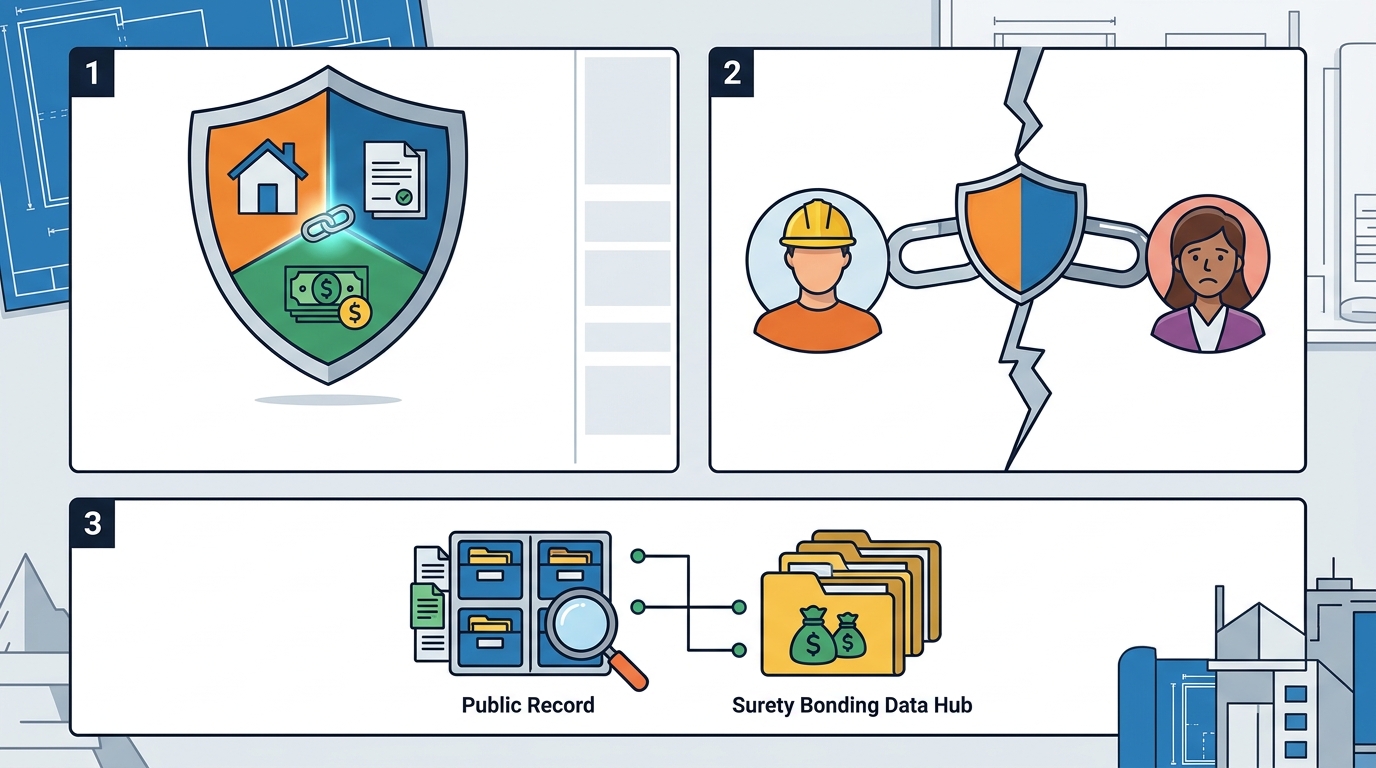
A contractor license bond is a three-party agreement that protects the public from financial loss caused by unlicensed or non-compliant contractors. It does not insure the contractor against liability, but it provides a financial remedy for homeowners and businesses when a contractor violates state licensing laws. BLDAssure helps contractors and owners understand these legal safeguards by connecting public license records with surety bonding data.
The Legal Nature of the Bond
A surety bond is a legal instrument that guarantees the principal (the contractor) will comply with specific laws and regulations. In the context of a license bond, the obligee is the state licensing board or the public, and the surety is the insurance company that issues the bond. This structure creates a direct legal pathway for the public to seek compensation if the contractor fails to meet statutory requirements. The bond is not a policy of insurance that covers the contractor's errors or omissions; rather, it is a form of financial security that ensures the state can recover funds if the contractor breaks the law.
For example, in California, the Contractors State License Board (CSLB) requires a $25,000 bond from every licensed contractor. This requirement is codified in the Business and Professions Code. The bond ensures that the state has a source of funds to compensate the public for damages resulting from the contractor's violation of licensing statutes. Understanding this distinction is critical for anyone hiring a contractor, as it clarifies what the bond covers and what it does not.
Who Is Protected by the Bond?
The primary beneficiaries of a contractor license bond are the members of the public, including homeowners, property managers, and business owners. When a contractor violates a state licensing law, the affected party can file a claim against the bond. The surety company investigates the claim and, if it is valid, pays the claimant up to the bond amount. This protection is designed to deter contractors from engaging in illegal practices, such as working without a license or failing to pay for required permits.
It is important to note that the bond does not protect the contractor from personal liability. If a claim is paid from the bond, the surety company has the right to seek reimbursement from the contractor. This process, known as subrogation, ensures that the financial burden of the violation ultimately falls on the contractor who broke the law. For homeowners, this means that the bond provides a safety net, but it is not a substitute for proper contract management and insurance coverage.
Common Violations That Trigger Claims
Claims against a contractor license bond are typically triggered by specific violations of state licensing laws. These violations can include working without a valid license, failing to maintain the required bond, or engaging in fraudulent practices. In some states, the bond also covers violations related to the payment of subcontractors and suppliers, although this is more commonly associated with performance and payment bonds. The specific scope of the bond depends on the state's statutes and the terms of the bond itself.
For instance, if a contractor in California fails to pay for a required building permit, the state can file a claim against the bond to recover the cost of the permit. Similarly, if a contractor is found to have misrepresented their license status, the state can seek compensation for any damages caused by that misrepresentation. These examples illustrate how the bond serves as a financial guarantee of compliance, rather than a guarantee of workmanship or quality.
How to Verify a Contractor's Bond
Before hiring a contractor, it is essential to verify that they hold a valid license and the required bond. Most state licensing boards provide online databases where you can search for a contractor's license status and bond information. In California, for example, the CSLB website allows you to look up a contractor's license number and view their bond status. This verification step is a critical part of due diligence and can help you avoid hiring an unlicensed or non-compliant contractor.
BLDAssure simplifies this process by aggregating license, bond, and permit data from public records into a single platform. This allows homeowners and property managers to quickly check a contractor's compliance status without navigating multiple government websites. By using such tools, you can make more informed hiring decisions and reduce the risk of financial loss due to contractor non-compliance.
Key Takeaways
- A contractor license bond is a three-party agreement that protects the public from financial loss due to contractor non-compliance.
- The bond does not insure the contractor against liability; it provides a financial remedy for the public.
- Claims are typically triggered by violations of state licensing laws, such as working without a license.
- The surety company investigates claims and pays valid ones up to the bond amount.
- The surety can seek reimbursement from the contractor after paying a claim.
- Verifying a contractor's bond status is a critical step in due diligence before hiring.
- Tools like BLDAssure can help you quickly check a contractor's license and bond status.
Frequently Asked Questions
Does a contractor license bond cover poor workmanship?
No, a contractor license bond does not cover poor workmanship or errors in the work. It only covers financial losses resulting from the contractor's violation of state licensing laws. For protection against poor workmanship, you should consider a performance bond or a warranty.
What happens if a claim is paid from the bond?
If a claim is paid from the bond, the surety company has the right to seek reimbursement from the contractor. This process is known as subrogation and ensures that the financial burden of the violation falls on the contractor who broke the law.
How much is a contractor license bond in California?
In California, the required contractor license bond is $25,000. This amount is set by the Contractors State License Board (CSLB) and is required for all licensed contractors.
Can I file a claim against a contractor's bond?
Yes, you can file a claim against a contractor's bond if you have suffered financial loss due to the contractor's violation of state licensing laws. You should contact the surety company that issued the bond to file your claim.
How can I verify a contractor's bond status?
You can verify a contractor's bond status by searching for their license number in your state's licensing board database. In California, you can use the CSLB website to look up a contractor's license and bond information. BLDAssure also provides a platform to check this information easily.
Conclusion
Understanding the legal protections provided by a contractor license bond is essential for anyone hiring a contractor. The bond serves as a financial guarantee of compliance with state licensing laws, protecting the public from financial loss due to contractor non-compliance. By verifying a contractor's bond status and understanding the scope of the bond, you can make more informed hiring decisions and reduce the risk of financial loss. BLDAssure provides the tools and data you need to check a contractor's license, bond, and permit status, helping you hire with confidence.