

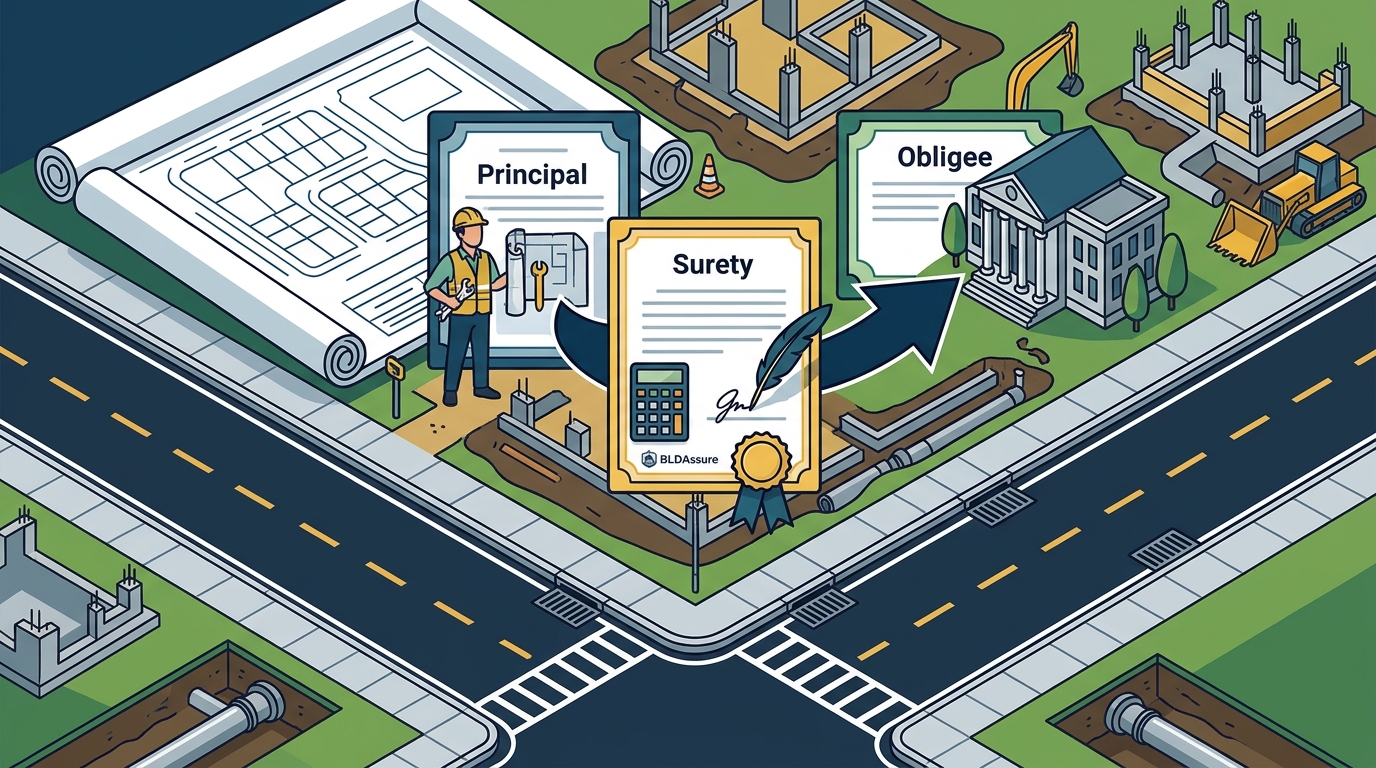
Subdivision and site improvement bonds are issued by licensed surety companies, not by the local governments that require them. These financial instruments guarantee that a developer will complete required public improvements, such as streets, sidewalks, and drainage systems, before a final plat is recorded. This guide explains the three-party structure of these bonds, the regulatory requirements for the surety issuers, and how local governments act as obligees to protect public infrastructure.
Surety Companies
A surety company is a financial institution licensed to underwrite and issue surety bonds. Unlike an insurance company, which pays claims to the insured, a surety company pays claims to the obligee (the entity requiring the bond) if the principal (the developer) fails to perform. The surety company acts as a guarantor of the developer's financial responsibility and ability to complete the work.
Licensing and Financial Stability
Surety companies must meet strict financial standards to issue bonds. In the United States, surety companies are regulated by state insurance departments and must maintain a minimum amount of capital and surplus. The U.S. Department of the Treasury publishes a list of approved surety companies, known as the Circular 570 list, which are authorized to issue bonds for federal contracts. While subdivision bonds are typically local or state obligations, they generally require issuers with strong financial ratings, such as A.M. Best ratings of A- or higher.
The Role of the Surety in Underwriting
When a developer applies for a subdivision bond, the surety company performs a rigorous underwriting process. This involves reviewing the developer's financial statements, credit history, and track record of completed projects. The surety company assesses the risk of the project, including the cost of the required improvements and the complexity of the site. If the risk is deemed too high, the surety may require additional collateral, such as a letter of credit or cash deposit, or may decline the application.
The Bond Issuance Process
The issuance of a subdivision or site improvement bond follows a specific legal and administrative workflow. This process ensures that all parties understand their obligations and that the bond is properly recorded with the relevant government authority. The process typically begins when a developer submits a preliminary plat or site plan to the local planning department.
Application and Underwriting
The developer, acting as the principal, applies for the bond through a surety company or a licensed insurance agent. The application includes detailed project plans, cost estimates for the required improvements, and the developer's financial information. The surety company's underwriters review this data to determine the appropriate bond amount and premium. The bond amount is usually set by the local government's subdivision regulations and is often a percentage of the estimated cost of the improvements, such as 100% or 110%.
Execution and Recording
Once approved, the surety company issues the bond document. The bond must be signed by authorized officers of the surety company and often requires a seal. The developer then records the bond with the county recorder's office or the local planning department, as required by local ordinance. Recording the bond makes it a matter of public record and ensures that the local government has a legal claim against the surety company if the developer fails to complete the work.
Release of the Bond
The bond remains in force until the local government inspects and accepts the completed improvements. Once the streets, sidewalks, and drainage systems are built to code and accepted by the public works department, the local government releases the bond. The surety company then discharges its liability, and the bond is closed. If the developer fails to complete the work, the local government can make a claim against the bond, and the surety company is responsible for paying the cost of completion.
Local Government Obligees
A local government obligee is the entity that requires the bond and benefits from its protection. In the context of subdivision and site improvement bonds, the obligee is typically the city, county, or municipal planning and public works departments. These entities are responsible for maintaining public infrastructure and ensuring that new developments do not shift the cost of infrastructure to existing taxpayers.
Regulatory Authority and Requirements
Local governments derive their authority to require subdivision bonds from state subdivision map acts and local ordinances. These laws allow local governments to set the standards for public improvements and to require financial security to ensure compliance. The specific requirements, including the bond amount, the type of security accepted, and the duration of the bond, are defined in the local subdivision regulations. For example, a city may require a bond equal to 110% of the estimated cost of street improvements to account for potential cost overruns.
Inspection and Acceptance
The local government obligee is responsible for inspecting the completed improvements to ensure they meet the required standards. This inspection is a critical step in the bond release process. If the improvements are not completed or do not meet code, the local government can make a claim against the bond. The surety company then has the right to step in and complete the work or pay the cost of completion. This process protects the public interest by ensuring that new developments contribute fairly to the infrastructure they use.
Comparison of Bond Types
Understanding the differences between various construction and site bonds is essential for developers and local officials. The table below compares subdivision bonds with other common types of surety bonds used in construction.
| Bond Type | Principal | Obligee | Purpose | Typical Amount |
|---|---|---|---|---|
| Subdivision Bond | Developer | City/County | Guarantees completion of public improvements (streets, drainage) | 100-110% of improvement cost |
| Performance Bond | General Contractor | Project Owner | Guarantees completion of the construction contract | 100% of contract price |
| Payment Bond | General Contractor | Subcontractors/Suppliers | Guarantees payment to subs and suppliers | 100% of contract price |
| Bid Bond | Contractor | Project Owner | Guarantees the bidder will sign the contract if awarded | 5-20% of bid amount |
Key Takeaways
- Subdivision and site improvement bonds are issued by licensed surety companies, not by local governments.
- The surety company acts as a guarantor, paying the obligee if the developer fails to complete the required improvements.
- Local governments act as obligees, requiring bonds to protect public infrastructure and ensure fair cost distribution.
- The bond amount is typically set by local ordinance and is often a percentage of the estimated cost of improvements.
- Surety companies perform rigorous underwriting, including financial reviews and credit checks, before issuing bonds.
- Bonds are recorded with the county or local planning department and remain in force until the improvements are accepted.
- The release of the bond occurs only after the local government inspects and accepts the completed work.
- Developers should work with experienced surety agents to navigate the underwriting process and secure the appropriate coverage.
Frequently Asked Questions
Who is the principal in a subdivision bond?
The principal is the developer or subdivider who is required to complete the public improvements. The principal is legally obligated to perform the work and is liable to the surety company if they fail to do so.
Who is the obligee in a subdivision bond?
The obligee is the local government entity, such as a city or county, that requires the bond. The obligee is the party that benefits from the bond and can make a claim against it if the principal fails to perform.
Who is the surety in a subdivision bond?
The surety is the licensed insurance company that issues the bond. The surety guarantees the principal's performance and is liable to the obligee if the principal fails to complete the work.
How much does a subdivision bond cost?
The cost of a subdivision bond, known as the premium, is typically a percentage of the bond amount. Rates vary based on the developer's creditworthiness, the project's complexity, and the surety company's underwriting criteria. Premiums can range from 1% to 5% of the bond amount.
Can a letter of credit be used instead of a surety bond?
Yes, many local governments accept letters of credit or cash deposits as alternative forms of security. However, surety bonds are often preferred because they do not tie up the developer's cash or credit lines and provide a guarantee of completion rather than just financial security.
What happens if the developer goes bankrupt?
If the developer goes bankrupt, the local government can make a claim against the surety bond. The surety company is then responsible for completing the work or paying the cost of completion. The surety company may then seek reimbursement from the developer's estate, but the local government is protected by the bond.
How long does a subdivision bond remain in force?
The bond remains in force until the local government inspects and accepts the completed improvements. This can take several months or even years, depending on the size and complexity of the project. Once the improvements are accepted, the bond is released and the surety's liability ends.
Where can I find a surety company to issue a subdivision bond?
You can work with a licensed insurance agent or broker who specializes in construction and surety bonds. BLDAssure partners with surety providers to help developers and contractors secure the bonds they need for their projects.
Conclusion
Subdivision and site improvement bonds are critical tools for ensuring that new developments contribute fairly to public infrastructure. These bonds are issued by licensed surety companies, which act as guarantors of the developer's performance. Local governments act as obligees, requiring these bonds to protect their infrastructure and ensure compliance with local regulations. By understanding the roles of the principal, obligee, and surety, developers and local officials can navigate the bonding process more effectively. For developers seeking to secure the necessary bonds for their projects, BLDAssure provides a streamlined platform to connect with surety partners and manage compliance requirements.