
When selecting a builder's risk insurer, you must evaluate coverage scope, carrier specialization, and claims handling. The right provider protects your project from theft, weather, and soft cost losses. BLDAssure helps you compare these factors across multiple carriers to find the best fit for your specific build.
Understand the Core Coverage Requirements
Builder's risk insurance is a specialized policy that covers physical loss or damage to a building under construction. It is distinct from standard property insurance because the structure is incomplete and exposed to different hazards. You need to identify exactly what is covered before binding a policy.
Most policies cover hard costs, which include materials and labor. However, you must explicitly verify if soft costs are included. Soft costs cover items like architectural fees, permits, and legal fees. If your lender requires soft cost coverage, ensure the policy includes it. A policy that only covers hard costs may leave you underinsured if a project is delayed.
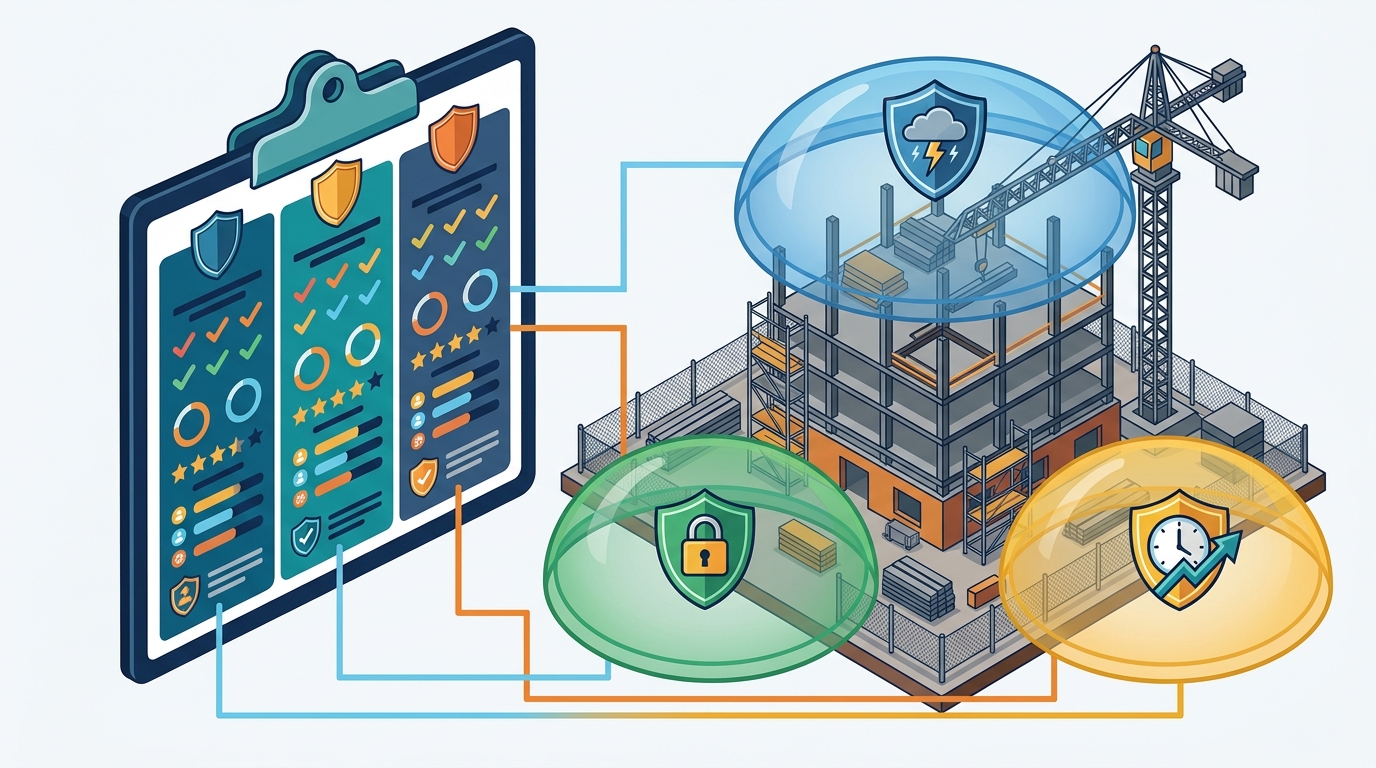
BLDAssure compares policies on terms, not just price. We show you what each policy pays for, including soft costs, theft, and weather events. This ensures you are not just looking at the premium but at the actual protection provided.
Evaluate Carrier Specialization in Construction
Not all insurance carriers write construction coverage with the same expertise. A carrier that specializes in builder's risk understands the unique risks of ground-up builds versus renovations. They know how to underwrite wood frame structures differently from steel or concrete builds.
Generalist carriers may offer builder's risk as an add-on to other lines. This can lead to gaps in coverage or stricter exclusions. You want a carrier that writes construction as a core business. They will have underwriters who understand the trade-offs in your specific project type.
BLDAssure works with carriers that write construction. We take your application to markets that understand your project type. This means you are dealing with underwriters who have priced similar builds before, leading to more accurate quotes and fewer surprises at renewal.
Compare Deductibles and Limits Carefully
Consider the limits of liability. Your policy limit should match the completed value of the project. If you build a $1.2 million home, your policy should cover that full amount. If you underinsure, you may face a coinsurance penalty if a claim occurs. This penalty can reduce your payout significantly.
BLDAssure helps you compare options side by side. We show you the completed value, construction type, and term for each quote. You can see how different deductibles and limits affect your total cost. This transparency helps you make an informed decision without guessing.
Assess Claims Handling and Service Speed
When a loss occurs, you need a fast and fair claims process. A slow claims process can delay your project and increase your costs. You want an insurer that responds quickly to inspections and approvals. This is especially important for time-sensitive construction projects.
Look for an insurer with a dedicated construction claims team. They should have the authority to make decisions without excessive bureaucracy. You also want to know if they have a local presence in your area. Local adjusters can inspect your site faster and understand local building codes better.
BLDAssure provides a licensed agent who handles the rest of the process. You fill out one short application, and we take it to carriers. Our agent manages the communication with the insurer, so you do not have to chase them for updates. This service model reduces your administrative burden during a stressful time.
Key Takeaways
- Builder's risk insurance is a specialized policy that covers physical loss to a building under construction.
- Verify if soft costs are included, as they are often excluded in basic policies.
- Choose carriers that specialize in construction to ensure accurate underwriting.
- Compare deductibles and limits to balance premium cost with coverage adequacy.
- Assess the insurer's claims handling speed and local presence.
- Use a platform like BLDAssure to compare multiple carriers on terms, not just price.
Frequently Asked Questions
What is the difference between builder's risk and standard property insurance?
Builder's risk insurance covers a building while it is under construction. Standard property insurance covers a completed building. Builder's risk policies are designed for the specific hazards of an unfinished structure, such as theft of materials and weather damage to exposed framing.
Do I need builder's risk insurance if I have general liability?
Yes, you still need builder's risk insurance. General liability covers third-party bodily injury or property damage. It does not cover damage to your own building or materials. Builder's risk is required to protect the physical structure and materials on site.
How long does builder's risk insurance last?
The policy term is usually aligned with the construction schedule. It starts when work begins and ends when the building is completed and a certificate of occupancy is issued. Some policies offer extensions if the project is delayed, but you must notify the insurer.
Can I get builder's risk insurance for a renovation?
Yes, builder's risk insurance can cover renovations. The coverage is sized based on the value of the work being done, not the entire building. You need to specify the scope of the renovation so the insurer can underwrite the correct limits. Learn more: About us our team.