
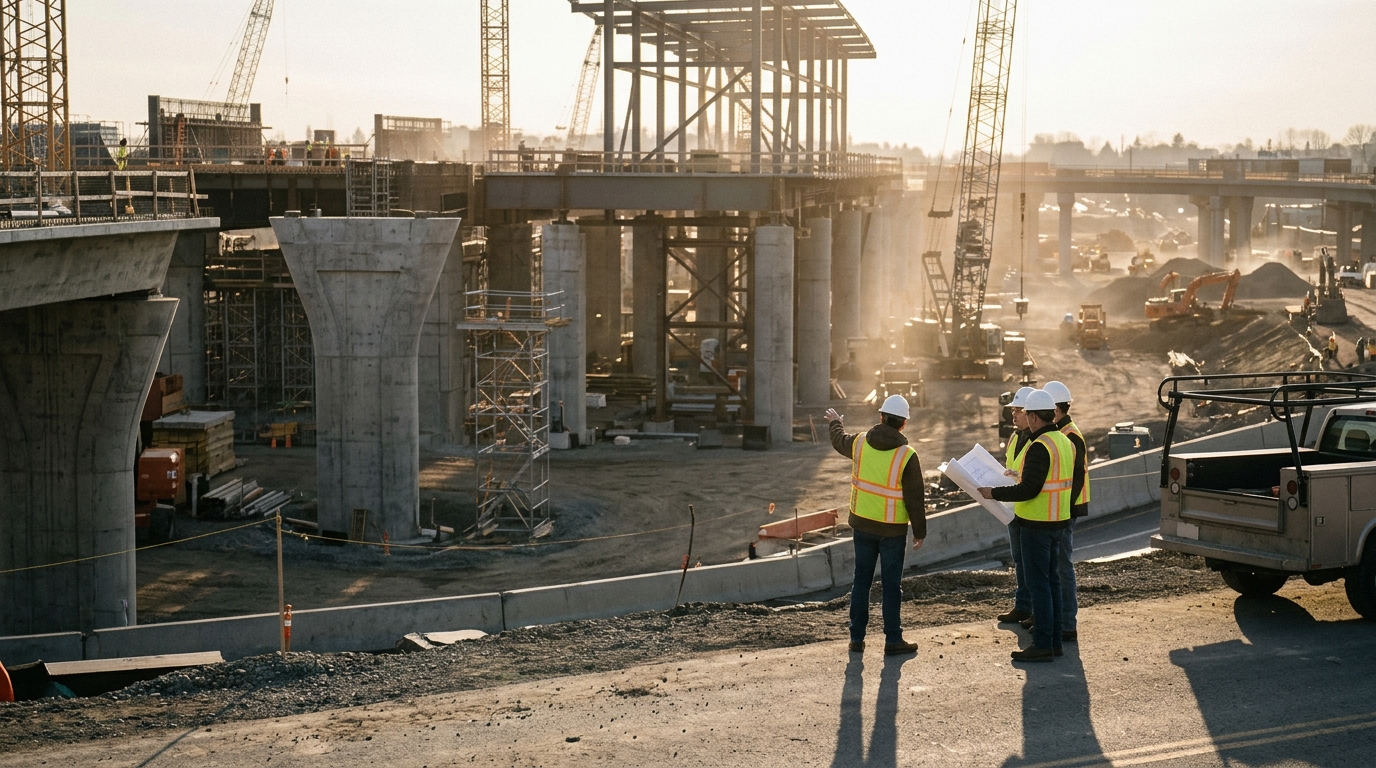
Surety companies evaluate a contractor's financial stability, past performance, and legal standing before backing public works bonds. They analyze balance sheets, bank references, and project history to ensure the contractor can complete the job and pay subcontractors. This underwriting process protects the public entity and the surety from financial loss.
Financial Stability and Balance Sheets
Surety underwriters prioritize a contractor's financial health above all else. They require detailed balance sheets, income statements, and cash flow statements to assess liquidity and solvency. A strong balance sheet demonstrates the ability to absorb unexpected costs during construction.
Underwriters look for a healthy current ratio, typically above 1.5, indicating the contractor can cover short-term liabilities. They also examine the debt-to-equity ratio to ensure the business is not over-leveraged. For example, a contractor with a current ratio of 2.0 and a debt-to-equity ratio of 0.5 presents a lower risk profile than one with a current ratio of 0.8.
Financial stability is the foundation of any surety bond. Without it, the surety cannot guarantee the contractor will complete the project. BLDAssure helps contractors prepare these documents by integrating with public records and providing a clear view of their financial standing.
Past Performance and Project History
Surety companies review a contractor's history of completing similar projects on time and within budget. They look for a track record of successful project delivery, including references from past clients and subcontractors. A consistent history of on-time completion reduces the risk of default.
Past performance is a strong indicator of future success. It shows the contractor has the operational capacity and management skills to deliver the project. BLDAssure provides access to permitted projects and project data, giving underwriters a comprehensive view of a contractor's experience.
Legal Standing and Compliance
Surety companies verify a contractor's legal standing and compliance with state and federal regulations. They check for active licenses, required bonds, and any history of legal disputes or liens. A contractor with a clean legal record is more likely to be approved for a bond.
Underwriters also review the contractor's workers' compensation insurance and general liability coverage. These policies protect the surety from claims arising from workplace injuries or property damage. For example, a contractor with a $1 million general liability policy and statutory workers' compensation coverage meets the minimum requirements for most public works bonds.
Legal standing ensures the contractor is operating within the law. It reduces the risk of regulatory penalties or project stoppages. BLDAssure tracks license status, bond filings, and insurance certificates, providing a real-time view of a contractor's compliance.
Project Specifics and Scope
Surety underwriters analyze the specific details of the public works project, including scope, timeline, and budget. They assess the complexity of the work and the potential risks involved. A project with a tight timeline or complex engineering requirements may require a higher bond amount or additional collateral.
Underwriters also review the contract terms, including payment schedules and penalty clauses. They ensure the contract is fair and reasonable, with no provisions that could jeopardize the contractor's ability to complete the project. For instance, a contract with a 90-day payment delay may require the contractor to have more cash reserves.
Project specifics help the surety understand the unique risks of the job. They allow the underwriter to tailor the bond terms to the project's needs. BLDAssure provides project data, including valuation and permit details, helping contractors and sureties align on the scope and risks.
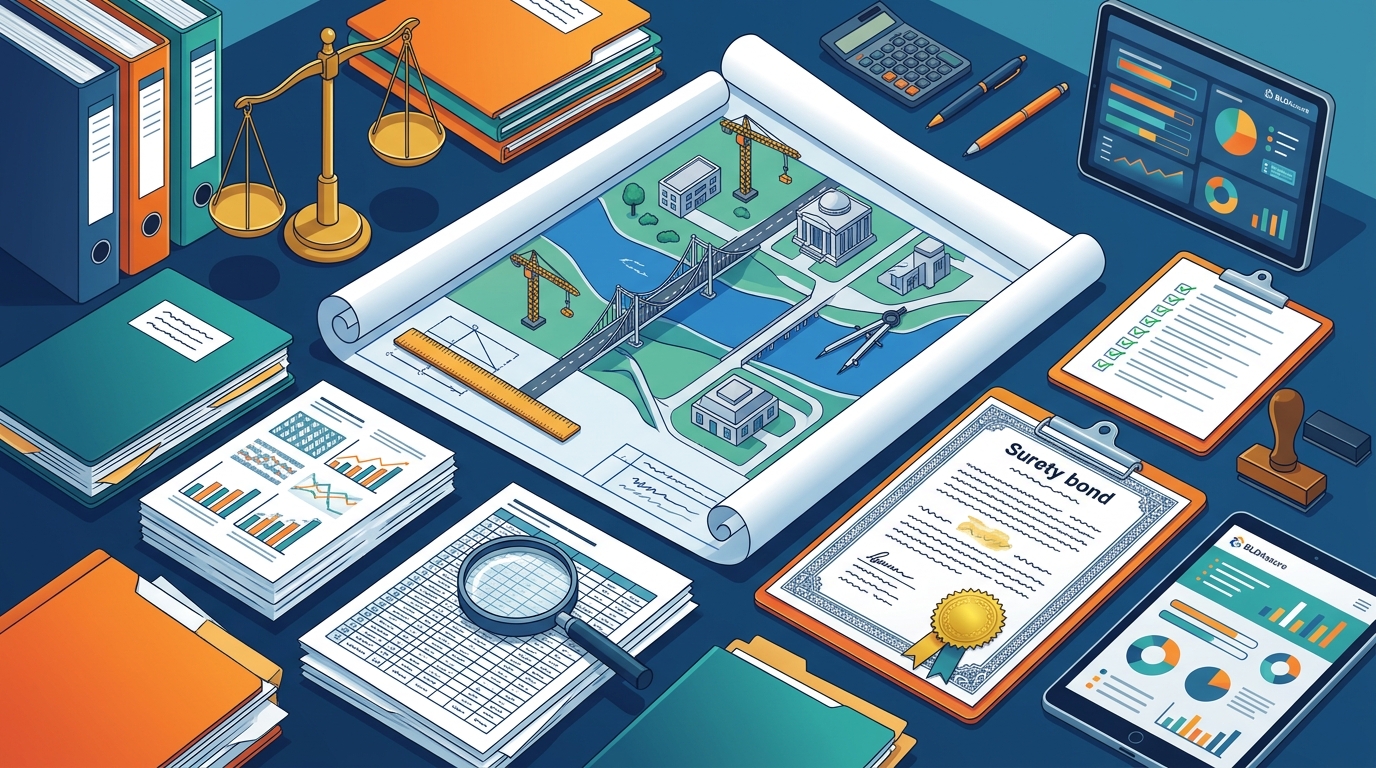
Key Takeaways
- Financial stability is the primary factor in surety underwriting, with balance sheets and cash flow statements being critical.
- Past performance, including on-time completion and similar project experience, strongly influences bond approval.
- Legal standing, including active licenses and clean compliance records, is essential for bond eligibility.
- Project specifics, such as scope and timeline, help underwriters assess unique risks and tailor bond terms.
- BLDAssure integrates project data, license records, and insurance information to streamline the underwriting process.
- Contractors should prepare detailed financial documents and a clear project history to improve their chances of approval.
Frequently Asked Questions
What is a surety bond?
A surety bond is a three-party agreement that guarantees a contractor will complete a project and pay subcontractors. It protects the project owner and the surety from financial loss if the contractor defaults.
How long does the underwriting process take?
The underwriting process typically takes 5 to 10 business days, depending on the complexity of the project and the completeness of the contractor's documents. BLDAssure can expedite this process by providing pre-verified data.
What documents are required for a public works bond?
Contractors must provide balance sheets, income statements, bank references, and a list of past projects. They also need to submit their license and insurance certificates. BLDAssure helps organize these documents for a smooth submission.
Can a contractor with bad credit get a surety bond?
Yes, but it may require additional collateral or a higher premium. Surety companies consider the overall financial picture, not just credit scores. BLDAssure can help contractors present their financial strength effectively.
What is the difference between a bid bond and a performance bond?
A bid bond guarantees the contractor will sign the contract if they win the bid. A performance bond guarantees the contractor will complete the project according to the contract terms. Both are often required for public works projects.
How does BLDAssure help with surety bonds?
BLDAssure provides a platform that centralizes project data, license records, and insurance information. This gives surety companies a clear view of the contractor's standing, speeding up the underwriting process. Learn more: About us our team.