

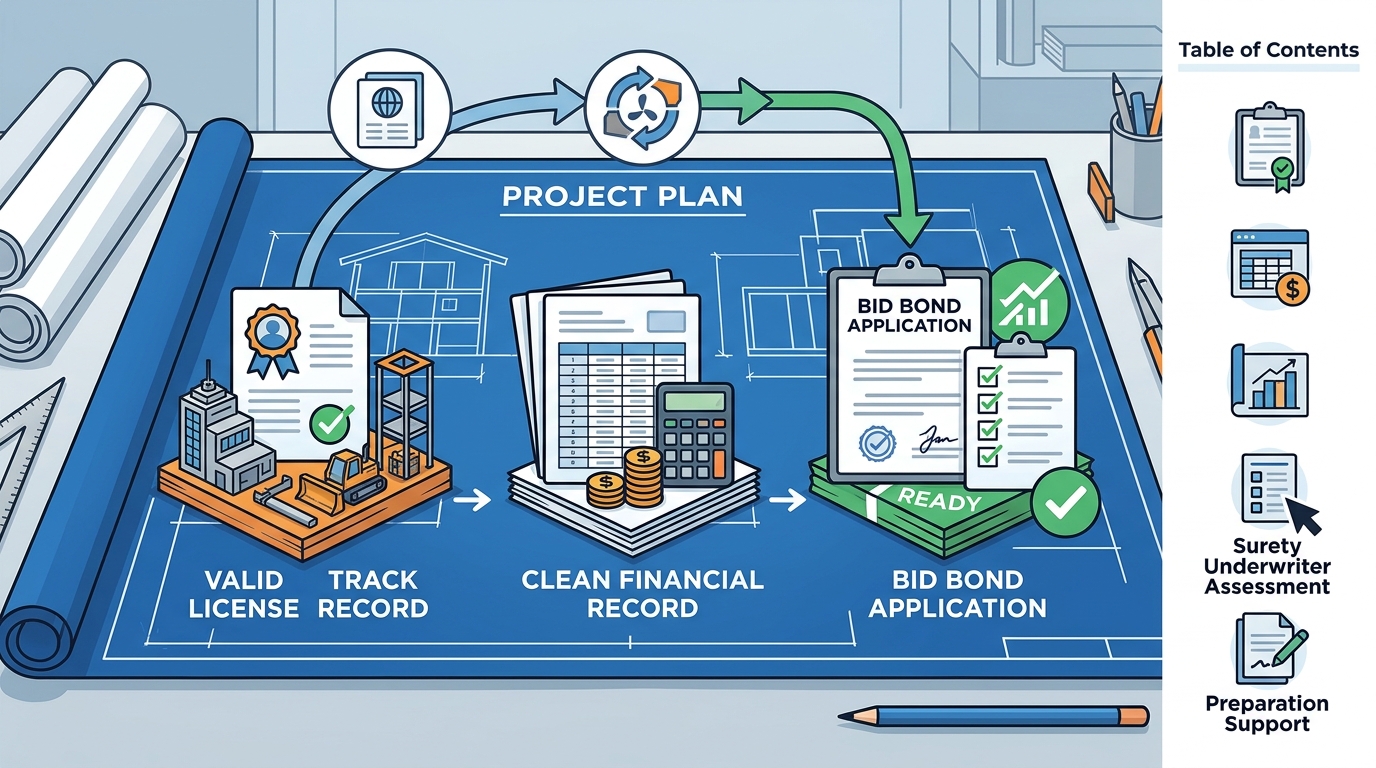
Contractors need a valid license, a clean financial record, and a solid track record to qualify for a bid bond. Surety underwriters assess these factors to ensure the contractor can complete the project if awarded. BLDAssure helps contractors prepare these documents by pulling public records and organizing their data into a clear submission.
Financial Stability and Credit
Financial health is the primary driver of bid bond pricing and approval. Underwriters look at your balance sheet, cash flow, and credit score to gauge your ability to mobilize a project. A strong financial position signals that you have the resources to start work immediately after winning a bid.
For example, a contractor with a high debt-to-equity ratio may face higher premiums or require a personal guarantee. BLDAssure integrates with surety partners to present your financial data in a standardized format, reducing the back-and-forth with underwriters. This clarity helps you understand exactly where you stand before you submit a bid.
License Status and Existing Bonds
Your license status is a non-negotiable requirement for any surety bond. The surety must verify that your license is active and in good standing with the state licensing board. Additionally, having an existing contractor license bond on file demonstrates your commitment to compliance and can speed up the bid bond process.
In California, for instance, the Contractors State License Board (CSLB) requires a $25,000 license bond for most contractors. BLDAssure verifies this status against state records, ensuring that your license and bond are current before you apply for a bid bond. This verification step prevents delays caused by administrative errors or lapsed registrations.
Project History and Track Record
Your past performance is a key indicator of your future reliability. Underwriters review your permit history, completed projects, and any claims or disputes. A consistent track record of on-time, on-budget completion builds trust with the surety and the project owner.
Consider a general contractor who has completed 50 residential projects in the last three years without any liens or complaints. This history provides concrete evidence of capability. BLDAssure compiles this data from public permit records, giving you a verifiable portfolio that supports your bid bond application. This data-driven approach helps you highlight your strengths to underwriters.
Project Specifics and Scope
The nature of the project itself influences qualification. Underwriters assess the scope, valuation, and complexity of the work. A large commercial project with a high valuation may require more rigorous financial scrutiny than a small residential job. Understanding these factors helps you prepare the right documentation.
Streamlining the Application Process
Qualifying for a bid bond can be time-consuming if you gather documents manually. A streamlined process reduces the risk of missing deadlines and improves your chances of approval. By using a platform that automates data collection, you can focus on bidding rather than paperwork.
BLDAssure automates the collection of license, bond, and permit data, creating a pre-filled application for your surety partner. This efficiency allows you to submit your bid bond application quickly and accurately. The result is a smoother experience that supports your bidding strategy and keeps you competitive in the market.
Key Takeaways
- Financial stability is the most critical factor in bid bond qualification.
- An active license and existing license bond are mandatory prerequisites.
- A strong project history with no liens or complaints builds underwriter trust.
- Project scope and valuation directly impact the level of scrutiny you face.
- Automated data collection can significantly speed up the application process.
- BLDAssure helps organize your records into a clear, underwriter-ready submission.
Frequently Asked Questions
What is a bid bond?
A bid bond is a guarantee that a contractor will not withdraw their bid and will enter into a contract if awarded the project. It protects the project owner from the cost of re-bidding if the winning bidder walks away.
How much does a bid bond cost?
Bid bond premiums typically range from 0.5% to 3% of the bid amount, depending on the contractor's financial health and the project size. BLDAssure partners with sureties to provide competitive rates based on your specific profile.
Do I need a license bond to get a bid bond?
Yes, most states require an active license and a license bond on file before a contractor can qualify for a bid bond. BLDAssure verifies your license status to ensure you meet this requirement.
How long does it take to get a bid bond?
With complete and accurate documentation, a bid bond can often be issued within 24 to 48 hours. Using a platform like BLDAssure to pre-fill your application can further reduce this timeline.
What happens if I win the bid but can't get a performance bond?
If you cannot secure a performance bond after winning, you may be liable for the bid bond amount. This is why it is crucial to qualify for both bid and performance bonds before bidding.
Start Your Bid Bond Application
Qualifying for a bid bond requires preparation and accurate data. BLDAssure provides the tools you need to organize your records and present a strong case to underwriters. To get started, explore our surety bond services and see how we can help you win more projects.